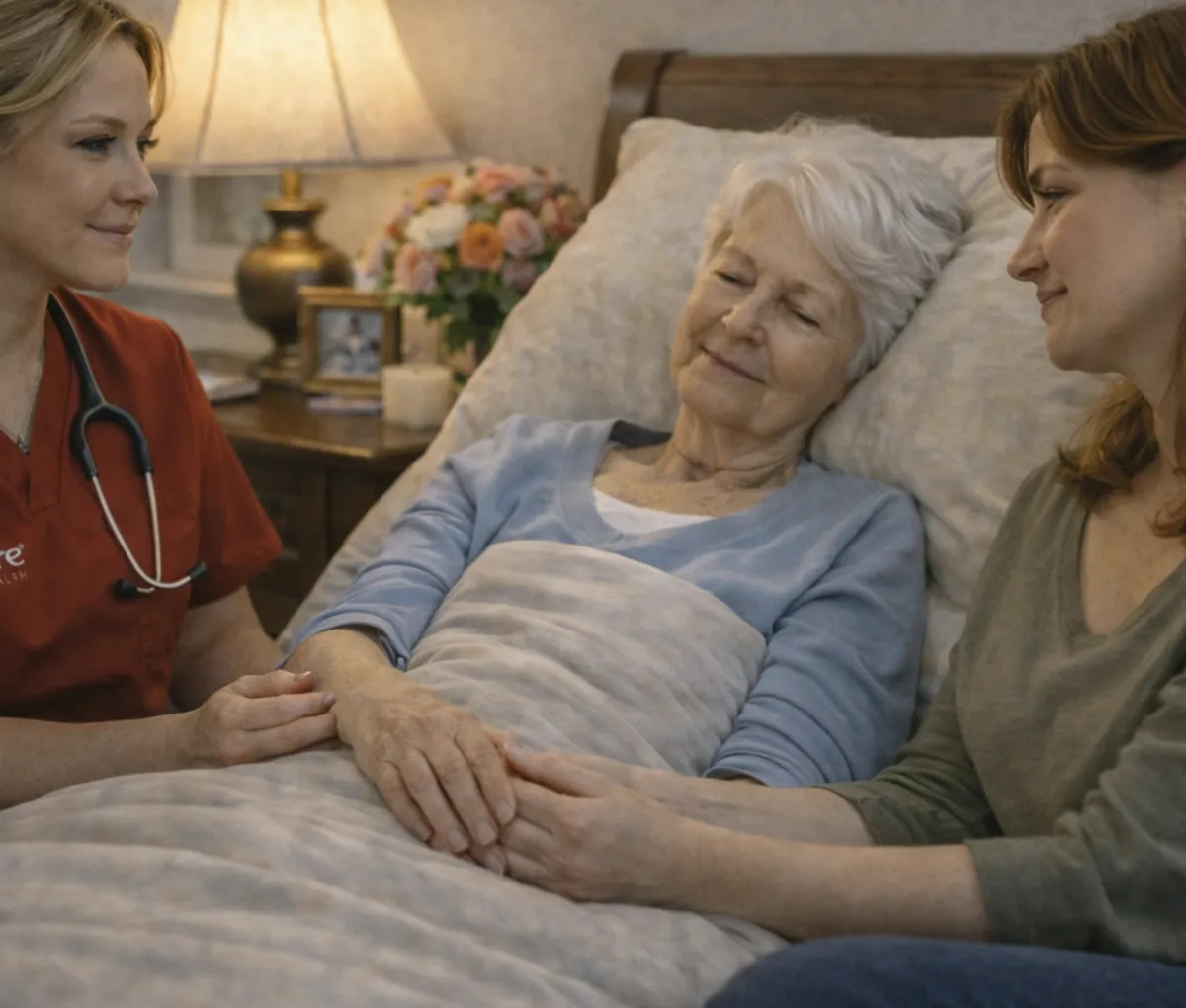
Hospice is not a signature. It is a standard.
Hospice Is Not a Signature. It Is a Standard.
Last week, my family gathered in a hospital room to say goodbye to my sister.
My sister was disabled.
She weighed just over 60 pounds.
For years, our family had cared for her with deep love and devotion. And like many families, we held onto hope longer than we probably should have.
To some of my siblings, this decline felt sudden.
They believed she would recover.
That she would return to her group home.
But from where I stood, I had been watching something different unfold.
I had been tracking the signs.
The slow, quiet indicators that the body is beginning to let go.
Her strength had changed.
She had gone from walking independently to needing a walker.
Her energy was fading.
Her pain was increasing.
And the small details you don’t forget as a caregiver…
At one time, she had round, full cheeks.
Now the facial fat was gone.
Her hair had thinned.
Her body was shrinking.
There were wounds on her feet that were not healing.
These were not isolated issues.
They were signals.
When Families See It Differently
When the physician recommended removing the ventilator, some of my siblings were in disbelief.
They kept asking me:
“Is this murder?”
“Is this euthanasia?”
“Are there legal consequences for doing this?”
They had less than five hours to process everything.
To call their children.
To gather.
To say goodbye.
And in that moment, I became the one guiding them.
Explaining what was happening.
Helping them understand the process.
Reassuring them that this was not causing death—
It was allowing a natural death to occur.
And Still… There Was No Hospice
When the time came, the ventilator was removed.
And the nurse left the room.
There was no hospice nurse.
No chaplain.
No social worker.
No one explaining what would happen next.
No one supporting my parents in the most devastating moment of their lives.
It was up to me to hold the room.
To explain the breathing changes.
To prepare my family for what they were about to witness.
I am the CEO of a hospice agency.
And even I was stunned.
Because hospice is not supposed to look like that.
Hospice Is Not a Signature. It Is a Standard.
What Families Need to Know Before Ventilator Withdrawal and End-of-Life Decisions
Last month, my family gathered in a hospital room to say goodbye to my sister.
My sister was disabled.
She weighed just over 60 pounds.
For many years, our family cared for her with deep love and devotion. Like many families, we held onto hope longer than we probably should have.
To some of my siblings, her decline felt sudden.
They believed she would recover.
They believed she would return to her group home.
But from where I stood, I had been watching something different unfold.
I had been tracking the signs.
The quiet indicators that the body is beginning to let go.
Her strength had changed.
She had gone from walking independently to needing a walker.
Her energy was fading.
Her pain was increasing.
At one time, she had round, full cheeks.
Now the facial fat was gone.
Her hair had thinned.
Her body was shrinking.
She had wounds on her feet that were not healing.
These were not isolated issues.
They were signals.
What Are the Signs That It May Be Time for Hospice?
Many families ask this question too late.
The signs are often not dramatic. They are gradual. They are easy to explain away.
But they matter.
Common signs that it may be time to consider hospice include:
• increasing weakness or need for assistance with walking
• noticeable weight loss or muscle and facial changes
• fatigue and increased sleeping
• chronic pain or discomfort
• wounds that are not healing
• reduced ability to recover from illness
These are not just medical details.
They are the body communicating that it is declining.
Recognizing these signs early can change everything for a family.
When Families See It Differently
When the physician recommended removing the ventilator, some of my siblings were in disbelief.
They kept asking me:
Is this murder?
Is this euthanasia?
Are there legal consequences for removing the ventilator?
These are real questions that families ask every day.
And they come from fear, not from lack of love.
They had less than five hours to process everything.
To call their children.
To gather.
To say goodbye.
And in that moment, I became the one guiding them.
Explaining what was happening.
Helping them understand that this was not causing death.
It was allowing a natural death to occur.
Is Removing a Ventilator Euthanasia?
This is one of the most common and misunderstood questions in end-of-life care.
The answer is no.
Removing a ventilator when a patient is no longer able to recover is not euthanasia. It is not causing death.
It is allowing the natural disease process to take its course.
When done appropriately, this decision is:
• medically guided
• legally supported
• ethically appropriate
But without proper guidance, families are left to wrestle with fear, guilt, and uncertainty.
This is where hospice should be present.
What Happened Next Should Not Happen
When the time came, the ventilator was removed.
And the nurse left the room.
There was no hospice nurse.
No chaplain.
No social worker.
No one explaining what would happen next.
No one supporting my parents in the most devastating moment of their lives.
It was up to me to hold the room.
To explain the breathing changes.
To prepare my family for what they were about to witness.
I am the CEO of a hospice agency.
And even I was stunned.
Because hospice is not supposed to look like that.
When Should Hospice Begin?
This is the most important truth I can share.
Hospice should begin before decisions like ventilator withdrawal are made.
Not after.
Not during.
Before.
Hospice is not just about the final hours of life.
It is about preparing families for what is coming:
• medically
• emotionally
• spiritually
When hospice is introduced early, families are not left guessing.
They are guided.
What Does Hospice Actually Provide?
Hospice is not a signature on a form.
It is a comprehensive Medicare benefit designed to reduce chaos, suffering, confusion, and financial strain.
When hospice is in place at the right time, families receive:
• a nurse who explains what to expect before crisis
• a CNA who supports bathing and daily care
• a chaplain who provides spiritual support
• a social worker who helps families prepare and process
• medications related to the terminal condition
• oxygen and medical equipment delivered to the home
• hospital beds and comfort supplies set up in advance
• 24/7 access to clinical support
• guidance through every stage of decline
Hospice is layered support while someone is still living.
No Family Should Have to Do This Alone
No family should be left to interpret the signs of dying on their own.
No family should have to answer legal and ethical questions in the final hours.
No family should sit in a hospital room without support when a life is ending.
My sister deserved more.
Every family deserves more.
Hospice Is Not Giving Up
One of the biggest fears families have is that choosing hospice means giving up.
It does not.
Hospice is about choosing a different kind of care.
It is about choosing:
• comfort over crisis
• clarity over confusion
• presence over paperwork
It is about honoring life, even at the end of it.
Hospice is more than the last breath.
It is the support that makes that breath gentler.
If You Are Facing This Right Now
If your loved one is declining,
If you are noticing changes and are unsure what they mean,
If you are being asked to make difficult medical decisions,
You do not have to navigate this alone.
Hospice can provide support earlier than most people realize.
Talk to Someone Who Can Guide You
If you have questions about hospice, ventilator withdrawal, or what to expect as a loved one declines, speaking with a nurse can bring clarity and peace of mind.
Aspire Home Health, Hospice, and Palliative Care serves families throughout Salt Lake, Davis, Weber, and Utah counties.
You can call 801-292-0296 to speak with someone who will walk you through your situation with compassion and clarity.
The Standard Matters
Hospice should not be rushed.
It should not be reactive.
And it should never be absent when it is needed most.
The standard matters.
And I intend to keep raising it.

