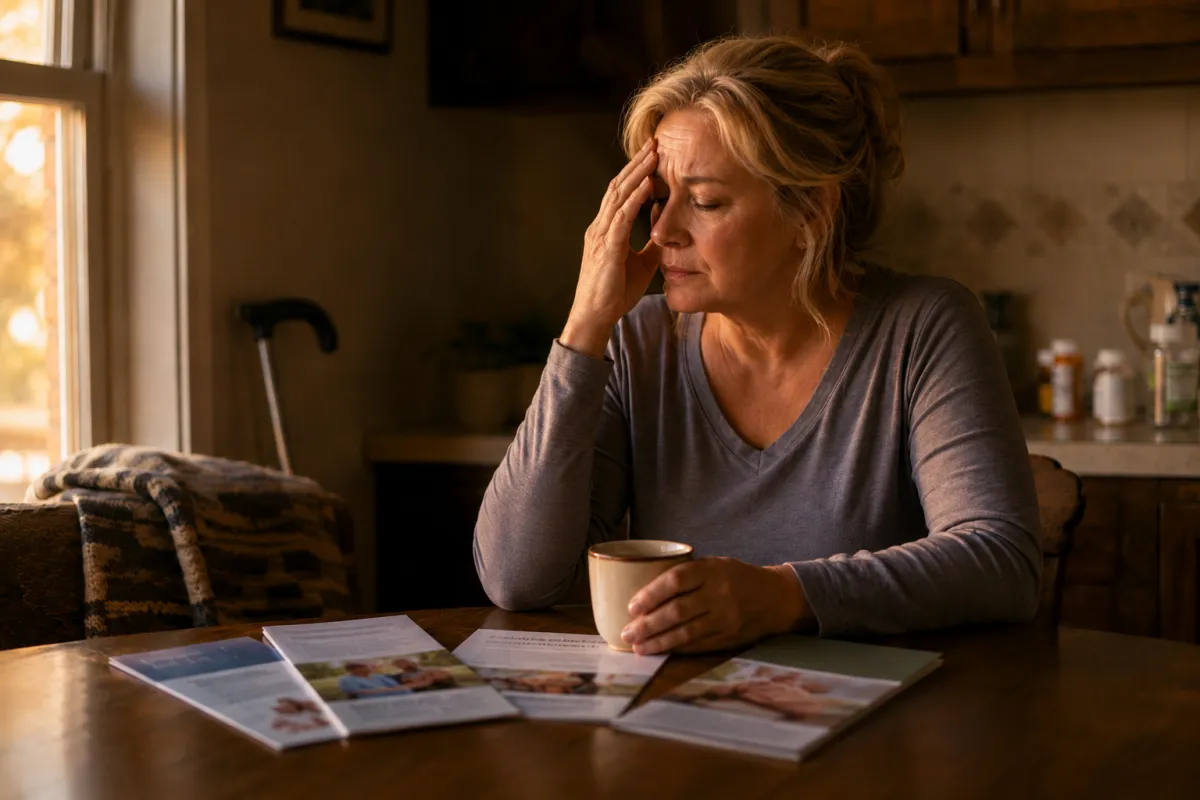
Caregiver Burnout Is Real: Signs You Need Help
Caregiver Burnout Is Real: Signs You Need Help
There is a moment I have witnessed over and over again in caregiving families.
Someone asks the caregiver,
“How are you doing?”
And almost automatically, they respond:
“I’m fine.”
Even when they are exhausted.
Even when they have not slept through the night in months.
Even when their own health is failing.
Even when they are emotionally drowning under the weight of responsibility.
Most caregivers never say the truth out loud:
“This is really hard, and I don’t know how much longer I can do this alone.”
As the CEO of Aspire In-Home Health Care, I have spent decades caring for patients and walking beside families during some of the hardest seasons of their lives. But long before healthcare became my profession, caregiving shaped my childhood.
My youngest sister, Karen, was born with a rare genetic disorder called Costello Syndrome. Her medical needs were enormous from the day she was born and continued throughout her entire life.
As a little girl, I remember one summer when my mother reached a breaking point.
I remember her crying to her sisters.
I remember hearing hopelessness in her voice.
I remember her saying she did not think she could keep going.
At the time, Karen was only a couple of years old.
My mother had spent years pouring every ounce of herself into caregiving. My father worked constantly and lived in a state of exhaustion. Years later, while driving the family through a mountain pass, he fell asleep at the wheel and rolled the car. Karen was thrown from the vehicle and life-flighted to Primary Children’s Hospital for the second time in her life.
Caregiver exhaustion is not just emotional.
It becomes physical.
Mental.
Spiritual.
And often, it happens so gradually that families do not recognize it until they are already in crisis.
Caregiver Burnout Rarely Happens All at Once
Most people imagine burnout as a dramatic collapse.
But in reality, caregiver burnout usually happens quietly over time.
At first, the caregiving responsibilities may not feel overwhelming. A spouse helps with medications. An adult child drives a parent to appointments. Someone begins assisting with meals, bathing, or managing bills.
Then little by little, the needs increase.
The loved one becomes weaker.
More forgetful.
Less steady.
More dependent.
The caregiver starts sleeping less.
Worrying more.
Ignoring their own doctor appointments.
Skipping meals.
Living in a constant state of hypervigilance.
Many spouses caring for a loved one with dementia or chronic illness quietly push aside their own medical needs for years because “right now” the patient seems more important.
What many people do not realize is this:
Sometimes the caregiver’s health deteriorates faster than the patient’s.
I have seen caregivers develop severe anxiety, depression, chronic illness, exhaustion, and physical decline because they spent so long taking care of everyone else that they stopped taking care of themselves.
Stress Magnifies Old Relationship Patterns
One of the things people rarely talk about is that caregiving does not erase complicated family dynamics.
In fact, it often magnifies them.
If one spouse historically controlled decisions, that pattern may intensify under stress.
Old hurts may resurface.
Siblings may disagree.
Adult children may carry resentment, guilt, or unresolved trauma into caregiving situations.
Caregiving can be beautiful.
It can also be incredibly complicated.
And that does not make anyone a bad person.
It makes them human.
Signs of Caregiver Burnout
Many caregivers do not recognize burnout in themselves because they believe exhaustion is simply “part of the job.”
But burnout has warning signs.
Some of the most common include:
Constant fatigue, even after resting
Irritability or emotional numbness
Anxiety or depression
Changes in appetite or weight
Difficulty sleeping
Frequent illness or worsening health problems
Feelings of resentment or guilt
Isolation from friends and family
Forgetfulness or trouble concentrating
Feeling trapped, hopeless, or emotionally overwhelmed
Losing patience more easily
Ignoring your own medical needs
Feeling like asking for help would mean failure
Perhaps the most dangerous sign is this:
You no longer recognize yourself.
The Lie Many Caregivers Tell
There seems to be an unwritten rule in our society that caregivers should quietly carry everything without complaint.
Many people believe:
“If I were stronger, I could handle this better.”
“Marriage means I should do this alone.”
“Good daughters don’t ask for help.”
“Other people have it worse.”
But the truth is, caregiving was never meant to be done in isolation.
And asking for help is not weakness.
It is wisdom.
Strong caregivers are not the ones who destroy themselves trying to prove they can do it all.
Strong caregivers are the ones who recognize when support is needed.
What Support Can Look Like
Help does not always mean “giving up” caregiving responsibilities.
Sometimes help looks like:
Home health services after a hospitalization
Palliative care for symptom management and emotional support
Hospice care focused on comfort and quality of life
Respite care so a caregiver can rest
Counseling or support groups
A nurse helping manage medications
A social worker helping families navigate difficult decisions
Friends bringing meals or sitting with a loved one for a few hours
Finally admitting:
“I cannot carry all of this by myself anymore.”
At Aspire, we often meet families at the exact moment they realize they are exhausted.
Not because they do not love their person deeply.
But because they have loved them so deeply for so long.
You Matter Too
If you are caring for someone you love, I want you to hear this clearly:
Your health matters too.
Your sleep matters too.
Your emotional wellbeing matters too.
You are not failing because you are tired.
You are human.
And no one should have to disappear inside caregiving.
At Aspire In-Home Health Care, we believe caring for the caregiver is part of caring for the patient. Sometimes the most loving thing a family can do is allow others to help carry the weight.
You Do Not Have to Carry This Alone
If you are feeling overwhelmed, exhausted, or unsure of what to do next, Aspire In-Home Health Care is here to help.
Whether your loved one needs home health support after a hospitalization, palliative care for serious illness, hospice care focused on comfort and quality of life, or simply guidance navigating the caregiving journey, our team is ready to walk beside you with compassion and expertise.
Sometimes one conversation can bring enormous relief.
You do not have to wait until you are in crisis to ask for help.
Call Aspire In-Home Health Care at 801-292-0296 to learn about available resources, caregiver support, and care options for your loved one.
Because caring for yourself is not abandoning the person you love.
It is what allows you to continue loving them well.

